
Efficient video encoding is crucial for seamless streaming and content delivery. Hardware encoders, designed specifically for encoding tasks, offer better performance, lower latency, and greater stability compared to software encoders.
This guide will explore the different types of hardware encoders, their benefits, and how they stack up against software options, helping you make informed decisions for your video needs.
Table of Contents
- Understanding Hardware Encoders: Types and Uses
- How Hardware Encoders Enhance Live Streaming Quality
- Exploring the Future of Hardware Encoders: Trends and Innovations
- How to Optimize Hardware Encoders for Maximum Performance
- The Role of Hardware Encoders in Professional Broadcasting
- Conclusion
Understanding Hardware Encoders: Types and Uses
In the world of digital media, video encoding plays a pivotal role converting raw video files into a format that can be easily streamed or stored. Hardware encoders stand out for their low power usage, small form factor, and ability to meet security needs and optimal performance.
Types of Hardware Encoders
1 RU MultiChannel Encoders
These dedicated devices operate independently, supporting up to 16 channels with Z3’s Blade System, ensuring reliable, high-quality video encoding. Common in professional broadcasting or large multi-channel displays, they handle HD or 4K video, offer multiple connectivity options, and are built for continuous operation for 24/7 footage—ideal for live streams and events.
Integrated Encoders
Built into ruggedized PTZ Cameras or Unmanned Systems, integrated encoders simplify workflows by capturing and encoding video with integrated Pan Tilt Zoom Controls, Full Camera Controls and Integration to Video Management Systems. For Unmanned Systems, API access is key for a Beyond Visual Line of Sight (BVLOS). They’re perfect for space and weight-limited unmanned or small inspection camera applications.
Portable Encoders
Compact and lightweight, portable encoders with small lightweight enclosures excel in airborne applications or ships where a smaller product option is needed. One can easily mount the device in vibration prone areas. Secure Reliable Transport (SRT) options allow the unit to deliver quality encoding, making them a go-to product for on-the-go applications.

Common Uses of Hardware Encoders
Hardware encoders are widely used across various industries for efficient video encoding.
Broadcasting
Essential in broadcasting, hardware encoders provide IPTV streams for live events and sports broadcasts. Their reliability minimizes delays and prevents quality loss, ensuring a seamless viewer experience.
Live Streaming
For events and content creation, hardware encoders deliver smooth, high-definition streams with minimal latency.
Security Systems
In surveillance systems, hardware encoders efficiently encode and transmit video feeds from thermal and visible cameras with integration to Video Management Systems (VMS). They handle large-scale systems in airports, the oil and gas industry, and urban centers, ensuring clear footage and optimized bandwidth usage.
Hardware vs Software Encoders
Understanding the differences between hardware and software encoders is key to choosing the right solution for your needs.
Performance Comparison
Hardware encoders excel in high-resolution, high-bitrate video encoding with faster speeds and lower latency, making them ideal for live streaming. In contrast, software encoders offer flexibility but often struggle with consistency for intensive processing tasks at higher resolutions, leading to ]video quality issues and video freezing effects. The CPU in a software encoder performs a variety of tasks for the OS, while the hardware encoder’s chipset is dedicated to solely encoding.
Cost Analysis
Hardware encoders have higher upfront costs due to specialized components but offer long-term reliability and performance. Software encoders are more budget-friendly initially but often have maintenance fees associated. Processing consistency cannot be expected while leveraging existing computer hardware where the memory may need upgrades over time to keep up with demanding tasks.
Use Case Scenarios
Hardware encoders are best for live broadcasting and scenarios requiring reliability and low latency. Software encoders suit smaller-scale projects for pre-recorded content, where adaptability is the key priority.
How Hardware Encoders Enhance Live Streaming Quality
In an increasingly digital world, live streaming has become a powerful tool for businesses. But not all streams are created equal. High-quality video is essential to captivate your audience and maintain their engagement. This is where hardware encoders come into play, offering a solution significantly enhancing live streaming quality.

Importance of Video Quality in Live Streaming
Viewer Experience
First impressions are crucial in live streaming. Clear, high-quality visuals attract viewers and keep them engaged, while poor quality often drives them away.
Engagement Rates
Good video quality enhances viewer interaction, boosting comments, shares, and likes. This increased engagement improves visibility and audience connection.
Brand Perception
A polished, high-quality stream reflects professionalism and credibility. In contrast, pixelated visuals and lag can harm your brand’s image.
Role of Hardware Encoders in Live Streaming
Real-Time Encoding
Hardware encoders use dedicated chips for video encoding, ensuring smoother, faster performance with minimal lag compared to software encoders.
Low Latency
They minimize delays, delivering near real-time interaction crucial for live events.
Stability and Reliability
Built for uninterrupted performance, hardware encoders offer consistent reliability, reducing the risk of crashes during critical live streams.
Key Features to Look For
Choose a hardware encoder with support for multiple resolutions, frame rates, platform compatibility, and an easy-to-use interface.
Tips for Optimization
- Set your desired Video Quality Settings
- Choose a Constant or Variable Bit Rate
- Set your desired Frame Rate
- Run test streams to fine-tune settings before going live.
The Future of Hardware Encoders Trends and Innovations
Imagine streaming your favorite show in stunning 8K resolution without lag or buffering, or picture real-time processing that can analyze and enhance footage as it’s being captured. These aren’t pipe dreams—they’re exciting trends in 4K video encoding and the future of hardware encoders.
Current Trends in Hardware Encoding
Rise of 4K and 8K Encoding
Hardware encoders now support ultra-high-definition formats like 4K and 8K, meeting growing consumer expectations for sharper visuals and future-proofing broadcast quality.
Increased Efficiency and Performance
Modern encoders feature optimized algorithms, real-time processing, and energy-efficient designs, ensuring high performance with minimal power consumption.
Integration with AI and Machine Learning
AI enhances encoding through real-time content analysis, error correction, and adaptive bitrate streaming for smoother playback.
Innovations in Hardware Encoders
- New Algorithms: VVC (H.266), AV1, and LCEVC offer superior compression efficiency.
- Enhanced Compression: Techniques like CABAC and predictive coding improve storage and transmission efficiency.
- Cloud Integration: Scalable cloud solutions enable remote access, resource flexibility, and disaster recovery.
Preparing for the Future
- System Upgrades: Ensure compatibility, adopt phased upgrades, and train teams effectively.
- Future-Proof Investments: Choose modular designs, ensure standards compliance, and prioritize vendor support.
- Stay Informed: Attend conferences, follow industry resources, and promote continual learning.
How to Optimize Hardware Encoders for Maximum Performance
Hardware encoders are essential for efficient video processing, offering superior performance compared to software-based encoding. However, achieving optimal video quality and performance requires fine-tuning specific settings.
Understanding Encoder Settings
Resolution & Bitrate
- Resolution: Higher resolution improves quality but demands more processing power. Match resolution to your content and platform.
- Bitrate: Higher bitrate enhances quality but requires more bandwidth.
Tip: For streaming, 1080p at 6-8 Mbps is a good starting point.
Frame Rate
- 60fps: Ideal for fast-paced content like gaming or sports.
- 30fps: Suitable for slower content, reducing encoder strain.
Compression Ratio
- High Compression: Smaller file sizes but reduced quality.
- Low Compression: Better quality but larger files.
Tip: Use modern codecs like H.264 or H.265 for optimal balance.
Tips for Enhancing Performance
- Firmware Updates: Keep firmware current for improved algorithms and bug fixes.
- Cooling: Ensure proper airflow and monitor temperatures to prevent overheating.
- Efficient Workflows: Use batch processing, offload tasks, and avoid overloading your CPU.
Troubleshooting Common Issues
- Latency: Reduce resolution, bitrate, or frame rate; ensure hardware meets requirements.
- Connectivity: Use wired connections for stability; ensure strong Wi-Fi signals if wireless.
- Quality Drops: Adjust compression settings, bitrate, or resolution to avoid artifacts.
Tip: Streamline processes with automation tools and avoid unnecessary background tasks.
The Role of Hardware Encoders in Professional Broadcasting
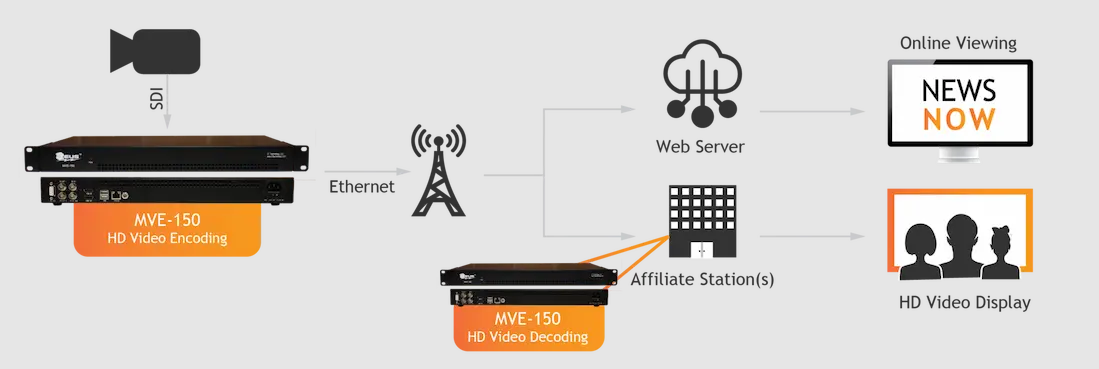
In the world of professional broadcasting, ensuring seamless, high-quality video transmission is paramount. Hardware encoders play a crucial role in delivering broadcast-quality content with precision, efficiency, and reliability. These devices are essential for converting raw video and audio signals into compressed digital formats suitable for streaming and broadcasting across various platforms.
Importance of Hardware Encoders in Broadcasting
High-Quality Transmission
Hardware encoders use advanced compression algorithms to deliver HD and 4K video with exceptional clarity across airwaves, satellites, and streaming platforms while optimizing bandwidth usage.
Reliability and Stability
With built-in redundancy and error correction, hardware encoders ensure uninterrupted live broadcasts, making them essential for critical events like sports, concerts, and news coverage.
Real-Time Encoding
Designed for minimal delays, hardware encoders guarantee smooth, lag-free transmission—crucial for live sports and breaking news.
Key Features for Broadcast Encoders
- Low Latency: Ensures real-time delivery, enhancing live event engagement.
- Scalability: Adapts to both large-scale events and smaller productions.
- Compatibility: Supports standards like H.264, HEVC (H.265), and MPEG-2 for seamless integration.
Real-World Applications
Live Sports & Events: Delivers real-time multi-camera feeds without lag.
Breaking News: Transmits live footage instantly from the scene.
Corporate Communications: Ensures smooth internal broadcasts.
Benefits
- Crystal-clear video quality
- Minimal latency
- Scalable performance
- Reliable, uninterrupted transmission
Hardware encoders are indispensable for delivering professional-grade broadcasts, keeping audiences engaged across all platforms.
Choose Z3 Technology
Hardware encoders are a powerful solution for anyone seeking reliable and efficient video encoding. With their superior performance, low latency, and stability, they are ideal for professionals in streaming, broadcasting, and video production. By understanding the types, features, and benefits of hardware encoders, you can choose the right device to meet your specific needs, ensuring high-quality video delivery every time.
Whether for live events or on-demand content, investing in the right hardware encoder can significantly enhance your video experience.
For more information on selecting the right hardware encoder for your needs, Z3 Technology is here to help. Contact us to enhance your video streaming and encoding processes with the best in hardware technology.